


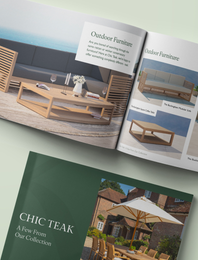

What Is Teak? Colour, Grain and How It Ages
Teak has been prized for outdoor furniture for centuries, but not all teak is equal. The difference between a piece that lasts a lifetime and one that cracks within a few seasons comes down to which part of the tree it's cut from, how it's selected, and how it's dried. At Chic Teak, we use only the best: carefully selected Grade A heartwood from mature trees, held to a quality standard above the trade average, free of knots and blemishes, and kiln dried for the British climate.
This piece explains what teak is, why heartwood matters, and how teak changes as it weathers, so you know exactly what you're buying and why ours stands apart. For the wider case for teak, see our post on why teak is good for outdoor furniture.
What Makes Teak Exceptional
Teak (Tectona grandis) is a tropical hardwood native to India, Myanmar, Laos and Thailand, and grown in long-established plantations across Southeast Asia, most notably on the Indonesian island of Java. A mature tree can reach around 40 metres in height.
What sets teak apart is its heartwood. As the tree ages, the timber at its centre builds up natural oils and silica, becoming dense, close-grained and highly resistant to water, rot and insects. That is what allows heartwood teak to stay outside through British winters for decades without oil, sealant or varnish. Timber of this quality takes decades to develop, which is why properly selected heartwood is never cheap. If the price looks too good to be true, the timber is unlikely to be heartwood.
Heartwood or Sapwood: Why the Cut Matters
Where the timber comes from within the tree is the single biggest difference between teak that lasts and teak that doesn't.
Grade A teak is cut from the heartwood at the centre of a mature tree, where the timber is densest and richest in natural oils. Grade B comes from the outer heartwood, with a lower oil content and a less consistent colour and grain. There can also be some sapwood included. Grade C has a much higher proportion of sapwood, which is the wood closest to the bark. It lacks the oils and silica that make teak durable and is far less stable outdoors.
There's a catch, though.
'Grade A' isn't an official, regulated classification, and the label is used loosely across the industry. It doesn't guarantee that timber came from the heartwood, or that it's free of knots and splits. Furniture sold as Grade A elsewhere can still carry blemishes.
Ours doesn't. We hold our suppliers to a standard above the trade average, so every Chic Teak piece is made from true heartwood with a clean, even grain. That's why we specify heartwood rather than relying on the Grade A label alone. We also use no stains or colouring treatments to disguise the natural appearance. You can read more about where our timber comes from in how we source our teak.
Our teak buying guide sets out all three grades in full, along with what to look for in the joinery and fittings.
Built for the British Climate
Even the best timber needs drying properly. Every piece we make is kiln dried to 10-15% moisture before it's worked, which sits close to the conditions it will live in outdoors in the UK. Timber dried to the 6-8% typical of indoor furniture takes on moisture once it's outside and swells, and that puts stress on the joints.
The Colour of New Teak
New teak is golden brown, ranging from pale honey to a deeper, warmer tone.
How Teak Changes Over Time
Outdoors, ultraviolet light breaks down the lignin and natural extractives in the outermost layer of the timber, and rain gradually washes that material away. The result is a slow, graceful shift from golden brown to silver-grey. It doesn't happen evenly or on a fixed timetable. The speed depends on where you live and how much sun, rain and weather the piece is exposed to. Because not every surface faces the same way, a piece will often weather unevenly for the first year or so before settling into a consistent tone.
The change is purely cosmetic. It affects only the very surface. Underneath, heartwood teak keeps its strength and its natural oils, and it doesn't dry out, turn brittle or lose durability as it greys. There's more on what to expect over the decades in how long teak garden furniture lasts.
Kept under cover, or in a conservatory or orangery, teak holds its golden tone considerably longer because it is sheltered from rain and from much of the direct sunlight that drives the change.
Why No Two Pieces Look Identical
Teak is worked from individual trees rather than manufactured to a colour reference, so no two pieces match exactly.
What Is Normal and What Is Not
A few things surprise people about new teak, and all of them are expected.
Checking is what worries people most, and it has its own guide. In short, the wood opens and closes with changes in humidity, settles over time, and doesn't affect strength. What is grain checking? explains it in full.
Splitting or gaps around the joints should not happen, and correct kiln drying prevents them.
Age discolouration, hairline cracks and minor movement are normal characteristics of a natural material rather than structural defects, so our ten-year guarantee does not cover them.
For the minimal upkeep teak needs, see our teak care guide. If you're deciding what to buy, browse our full range of teak garden furniture.
FAQs
What makes Chic Teak's teak different?
Every piece is made from true, carefully selected Grade A heartwood, held to a quality standard above the trade average so it's free of knots and blemishes. It's kiln dried to 10-15% moisture for the British climate, and joined with dowelled and bonded mortice and tenon joints. There is no sapwood included.
What colour is teak?
New teak is a warm golden brown. Left outdoors, it weathers to an even silver-grey. Under cover, it holds its golden tone for much longer.
Is teak a hardwood?
Yes. Teak (Tectona grandis) is a tropical hardwood native to South and Southeast Asia. Its durability comes from the dense, oil-rich heartwood that forms as the tree matures.
Where does teak come from?
Teak is native to India, Myanmar, Laos and Thailand. Much of the teak used for garden furniture today comes from managed plantations, particularly in Indonesia.
What is the difference between Grade A, B and C teak?
Grade A comes from the heartwood at the centre of a mature tree, Grade B from the outer heartwood (but may include some sapwood), and Grade C has a much higher proportion of sapwood (wood nearer the bark). Only heartwood carries the full natural oil and silica content that makes teak so durable outdoors.
Why is my teak furniture going grey?
Ultraviolet light breaks down the lignin and natural extractives at the surface, and rain washes them away, leaving a silver-grey patina. It affects the surface only and does not weaken the timber.
Can I stop teak from going grey?
You can slow it, but you can't stop it entirely outdoors. Keeping a piece under cover delays the change. We don't recommend varnishes or film-forming sealants on heartwood teak. They can peel and trap moisture, and they add upkeep the timber doesn't need. Any products used on our furniture would void the guarantee.
Does weathering affect how long teak lasts?
No. The silver-grey patina is cosmetic. Heartwood teak keeps its natural oils and strength beneath the surface, whatever colour it has weathered to.
Why do my teak pieces not match?
Teak is worked from individual trees rather than made to a colour reference. Variation between pieces is expected and evens out as the timber weathers to a common tone.